The Ghost in the Syntax: Survival in the Era of Vibe-Coding
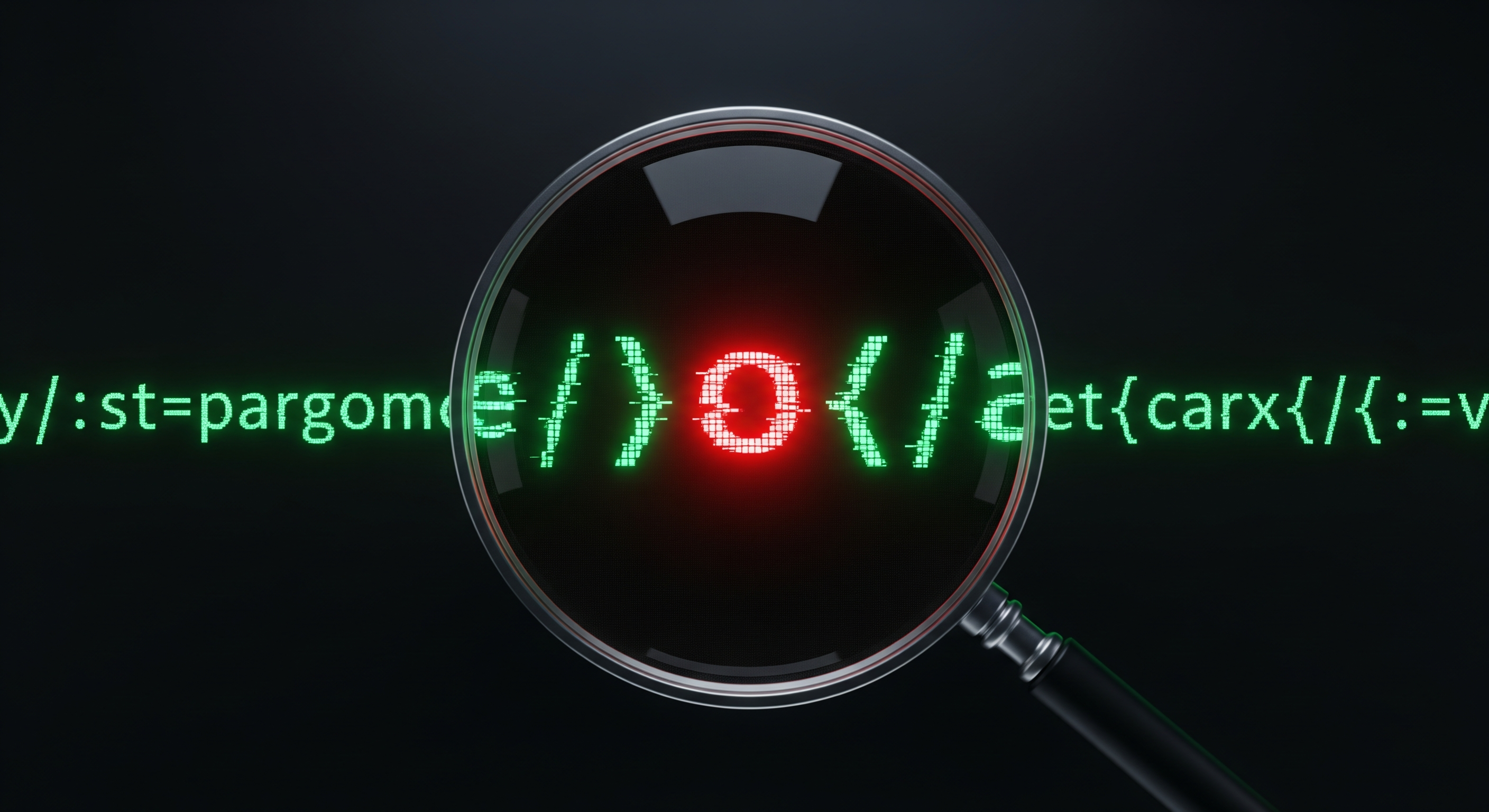
At a desk illuminated by the cool, antiseptic glow of a high-resolution monitor, a developer types a single, evocative sentence: "Make the interface feel more organic." Within seconds, blocks of React code cascade down the screen like digital rainfall, manifesting a fluid, pulsing UI that seems to breathe. To the uninitiated, it is magic—a frictionless translation of human desire into machine logic. But three weeks later, in the cold light of a production environment, the system shudders and dies. A catastrophic memory leak has paralyzed the server, and the AI that birthed the code cannot explain the ghost in its own syntax.
This is the seductive trap of our current moment. We are witnessing a tactical retreat from the keyboard, moving away from the physical substrate of brackets and semicolons toward a world governed by "vibes." Yet, as the mechanical labor of typing vanishes, the cognitive load is quietly shifting. The keyboard may be silent, but the burden of discernment has never been heavier. We are trading the physical exhaustion of the writer for the high-stakes, adversarial anxiety of the auditor.
The Great Abstraction: Defining the Vibe-Coding Paradigm
The industry is currently undergoing a structural pivot from syntax to intent—a shift colloquially termed "vibe-coding." This is not merely a new toolset; it is an ontological change in the act of creation. At its heart lies the concept of "Material Disengagement," a term popularized by Andrej Karpathy to describe a state where the developer orchestrates production through an intermediary, effectively forgetting that the underlying code exists as a physical medium.
In this paradigm, the developer’s gaze shifts from the microscopic to the macroscopic. They are no longer a "coder" in the traditional sense but are evolving into a System Architect or Creative Technologist. The focus has moved from "How do I write this function?" to "What do I want this experience to feel like?" and "How should these agents interact?"
| Characteristic | Traditional Programming | Vibe-Coding | | :--- | :--- | :--- | | Primary Skill | Syntax, Algorithms, Manual Logic | Intent Modeling, Context Management | | Abstraction Level | Close to Language/Framework | Close to Natural Human Speech | | Development Focus | Implementation Detail and Syntax | Problem-Solving and Architectural Intent | | Speed Basis | Incremental / Time-Intensive | Exponential / Rapid Prototyping |
The danger of this abstraction is the potential loss of the "mental schemas" required to understand the very systems we are manifesting. If we lose the ability to reason from first principles, we become operators of black boxes we can no longer open.
The Productivity Paradox: Why Faster Feels Slower
There is a profound Perception-Reality Gap currently haunting engineering departments. Developers report feeling like superheroes, yet the objective data reveals a startling delusion. According to the Sonar 2026 State of Code Survey, while 90% of developers use AI assistants, a staggering 96% do not fully trust the accuracy of the output.
The METR study quantifies this paradox: seasoned developers believed they would be 24% faster using AI, but objective measurement showed they were actually 19% slower. Even after the tasks were completed, developers still believed they had been 20% faster. We are seduced by the lack of friction in the generation phase, ignoring the "Verification Tax":
- The Debugging Loop: Agonizing over "almost right" code—solutions that look plausible but fail on subtle edge cases.
- Context Blindness: AI generates "Islands of Logic," duplicating functionality across repositories rather than discovering existing abstractions.
- Review Overhead: AI-generated Pull Requests wait 4.6 times longer for review than manual code due to heightened caution.
The Tsunami of Debt: Security and the "6-Month Wall"
This "vibe-first" mindset often leads to the "6-Month Wall"—the critical point where accumulated technical debt and logical inconsistencies become so overwhelming that the application becomes unmaintainable.
The security crisis is even more acute. Data from Veracode reveals that between 40% and 51% of AI-generated code contains at least one security vulnerability. In Java, the security failure rate skyrockets to 72%. These are fundamental "Hallucinations of Safety":
- The CORS Trap: Defaulting to wildcard origins for immediate functionality, exposing systems to data theft.
- Package Hallucination: Suggesting non-existent libraries, allowing attackers to plant "phantom" Trojan horses.
The Broken Rung: A Bifurcated Labor Market
The software engineering labor market is rebalancing, creating a "hollowing out" of the entry-level pipeline. A Stanford study found a 13% to 25% decline in employment for early-career engineers in AI-exposed roles.
By automating the "starter tasks," we are facing an "Oedipus Paradox": junior developers use AI tools more effectively than seniors, yet they lack the "cognitive pain" required to build the mental models needed to fix those tools when they fail. The industry is creating "Hollow Seniors"—practitioners fluent in orchestration but lacking the first-principles skills required to resolve complex systemic failures.
The "Authoritative Verifier": The New Human Frontier
The role of the engineer is shifting from "Writer" to "Adversarial Auditor." In this new world, traditional languages like C++ or Python are no longer the primary means of writing; they are the essential means of reasoning. You cannot verify what you cannot read.
This has given rise to the SHIELD Manifesto for AI governance:
- Separation of Duties: Isolating AI agents from production.
- Human-in-the-Loop: Reviewing every line of machine-authored code.
- Input/Output Validation: Explicit prompting for sanitization.
- Environment Scoping: Protecting sensitive secrets.
- Least Agency: Restricting permissions of autonomous agents.
- Defense in Depth: Using traditional static analysis to catch what the "vibe" missed.
Conclusion: The Barbell Future
We are entering a "Barbell" economy. At one end, cost-efficient AI will automate the routine, low-stakes boilerplate. At the other, high-stakes human expertise will command a premium for architectural excellence and the rigorous verification of mission-critical systems.
In an era where everyone can "vibe" a program into existence, the most valuable person in the room is the one who still knows how to read the silence between the lines of code. Truth is no longer found in the suggestion, but in the substrate.
The machines are writing the future; only the humans can read it.